
How Far in Advance Should You Book a Two-Week Italy Trip?
Twelve to fourteen months for summer. Nine to twelve for late spring and early fall. If you're thinking about two weeks in Italy next June and it's already September, you're not early. You're right at the back edge of the good window.
That's the short answer, and it's the one most people want. But it's also the least useful part of this post, because a two-week Italy trip doesn't get booked on a single day. It gets booked in pieces, and the pieces open at wildly different times.
Why does two weeks need more lead time than one week?
Because the difficulty compounds rather than adds.
One week in Italy is usually two properties and one train. Two weeks is four or five properties, three or four transfers, guides in multiple cities, and probably a driver for at least one leg. Every one of those has its own availability calendar, and your trip is limited by whichever one runs out first.
A week is a booking. Two weeks is a sequence, and sequences break at the weakest link. The Rome and Florence portion might be wide open in March while the four nights you wanted on the Amalfi Coast went in November.
What opens first?
The flights, and it's not close.
US airlines load schedules roughly 331 days out. Delta and American both sit at 331 days; United runs about eleven months. That means the seats for next July go on sale before almost anything else you'll book, and premium cabin inventory to Europe is at its thinnest exactly when everyone is looking at the same summer weeks.
If you're flying business class to Italy in high season, the flights often decide your dates rather than the other way around. I'd rather build a trip around two good flight days than force a perfect itinerary onto a routing that has you connecting twice with a five-hour layover in Frankfurt.
Which pieces sell out first, and which can wait?
Roughly in this order:
Villas, and small properties on the Amalfi Coast and Lake Como. Twelve to fourteen months for summer. A property with 40 keys and a four-month season does not have a shoulder.
Suites and connecting rooms at the well-known five stars in high season. Ten to twelve months. Standard rooms hold longer than suites, and connecting rooms for families go earliest of all.
Private guides in Rome, Florence and Venice for peak weeks. Six to nine months. The best ones book further out than the properties do.
Drivers and boat days. Three to six months, longer in August.
Restaurants worth planning around. Usually 30 days, occasionally 60.

Is there anything you can't book early even if you want to?
Yes, and it surprises people.
The Colosseum releases timed tickets exactly 30 days before the visit date, and those tickets carry your name and get checked against your ID at the gate. You cannot buy them in November for a trip in July. The Galleria Borghese admits visitors in fixed two-hour slots and clears the building between them. The Vatican has its own system, and guides need annual accreditation to lead you through it.
So a finished-looking Italy itinerary handed to you eight months out still has holes in it that someone has to go back and fill at the right moment. That's not a flaw in the plan. It's how Rome works now, and it's worth knowing whether the person who built your itinerary intends to be there at the 30-day mark or considers the job done.
Which dates should shape the whole plan?
Easter and Ferragosto, in that order.
Easter 2027 falls on March 28, which is early. Seasonal properties on the Amalfi Coast and the lakes generally open around Easter and close in early November, so an early Easter pulls the whole season forward and compresses the shoulder weeks people count on for better rates and thinner crowds.
Ferragosto is August 15, and the two weeks around it are when Italians take their own holidays. Cities empty out, family-run restaurants close for a fortnight with a handwritten sign on the door, and the coast fills. It's a real season with its own character, and it's a bad accident if nobody warned you.
What should you handle before you book anything at all?
Three things, and all of them are time-bound in ways people discover too late.
Check your passport today. Routine renewal is running 4 to 6 weeks, expedited 2 to 3, and mailing time isn't included in either number, so add up to two weeks on each end. Worst case, you're ten weeks from where you started. Italy also wants at least three months of validity beyond your departure from the Schengen area, and a passport issued within the last ten years.
Watch the EU entry requirements. The Entry/Exit System has been phasing in at Schengen borders since October 2025, and ETIAS, the paid travel authorization Americans will need, is expected in the last quarter of 2026 with a six-month transitional period and a six-month grace period after that. For a 2027 trip you should plan on needing it.
Buy your insurance when you pay your first deposit, not later. Most policies that waive pre-existing medical conditions require you to purchase within 14 to 21 days of your initial trip payment, and they generally require you to insure the full trip cost. That clock starts the day you put money down on anything, including the flights. It's the most commonly missed deadline in the entire planning process, and there's no way to reopen it.
Is it ever too late?
Not as often as people fear, but the trip changes shape.
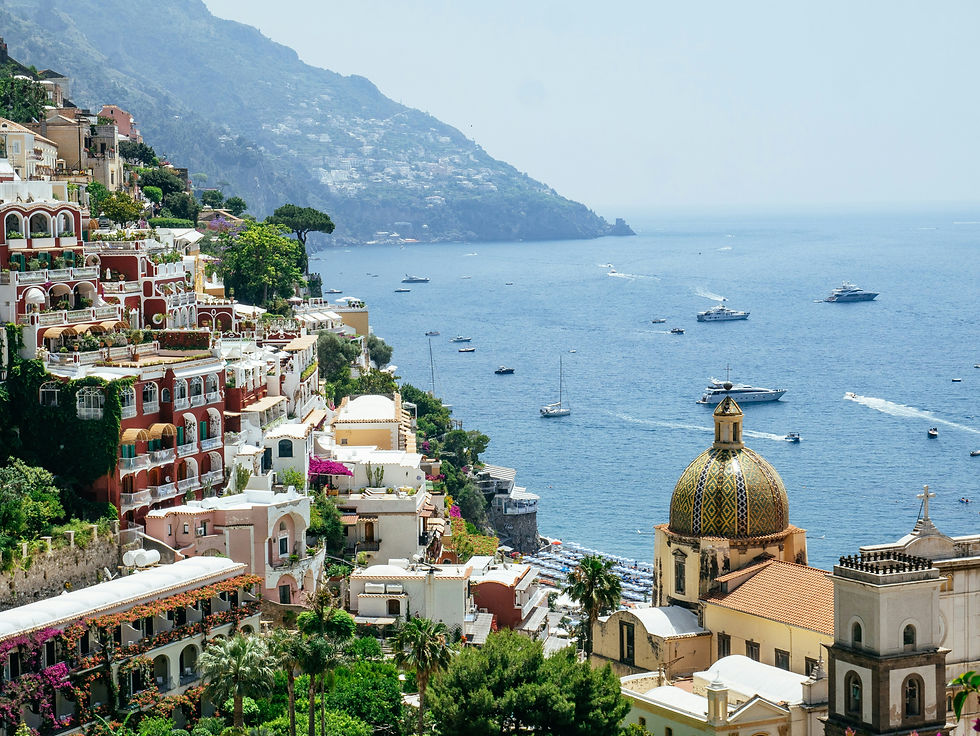
At four months out for a July trip, I can usually still build something very good. It just won't be the version where you get the specific corner suite in Positano and the guide everybody wants. We work with what's genuinely available and I'll tell you honestly where the compromises are, rather than selling you a lesser room at the same property and hoping you don't notice.
At six weeks out, we're talking about a different trip in different places. Sometimes a better one, because the destinations with real late availability in August are often the ones your friends didn't think of.
How I sequence it
I start with the two or three things that cannot flex, which is usually the flights, one property that anchors the trip, and any date you're traveling around. Everything else gets built to fit those.
Then the pieces that have to wait get calendared, and I hold those dates myself. Colosseum tickets at 30 days. Restaurants at 30 days. Guide confirmations reconfirmed a week out with the destination management company on the ground in Italy, because a guide booked in January is a name on a list until somebody checks it again in June.
That's the difference between an itinerary and a trip that actually runs.
Planning Italy for next year?
If you're looking at two weeks in Italy and trying to work out whether you're early, late, or right on time, let's talk through your dates.
Alex Ziselman is the owner of A2Z Travel Design, an affiliate of Gifted Travel Network, a Virtuoso member agency.


Comments